Upcoming Events




Opened on 30 June and open to the public until 6 September 2026 at the Grimaldi Forum, the exhibition Monaco & the Automobile celebrates more than 130 years of automotive history. In this two-part series, we invite you to discover some of the exhibition’s most iconic vehicles that have left their mark on the Automobile Club de Monaco’s events. In this second part, we focus on five legends of the Monaco Grand Prix !
Among the 53 iconic vehicles featured in the exhibition Monaco & the Automobile, from 1893 to the Present Day, many have contributed to the legend of the Monaco Grand Prix. Here is a non-exhaustive list of five iconic cars from the race that you can see at the Grimaldi Forum.
It’s a true piece of history, the oldest Grand Prix car in the exhibition. The Bugatti 35B was the car in which William Grover-Williams, known as ‘Williams’, won the very first Monaco Grand Prix on 14 April 1929. Organised by Antony Noghès, with the support of Prince Louis II and the racing driver Louis Chiron, the race featured 16 cars racing around the streets of the Principality. After 100 laps and nearly 4 hours of racing, Williams took the win ahead of Bouriano’s Bugatti 35C.
Originally blue, the Bugatti 35B driven by Williams, a British-licensed driver, was painted British Racing Green (dark green), Great Britain’s national color in motorsports. It was subsequently repainted blue by its owner, as you will see when you visit the exhibition.
Initially a racing driver, William Grover-Williams went on to become a hero of the Resistance. During the Second World War, he worked for the Special Operations Executive on French soil. However, he was arrested and imprisoned at Sachsenhausen concentration camp in August 1943, before being executed there in March 1945.
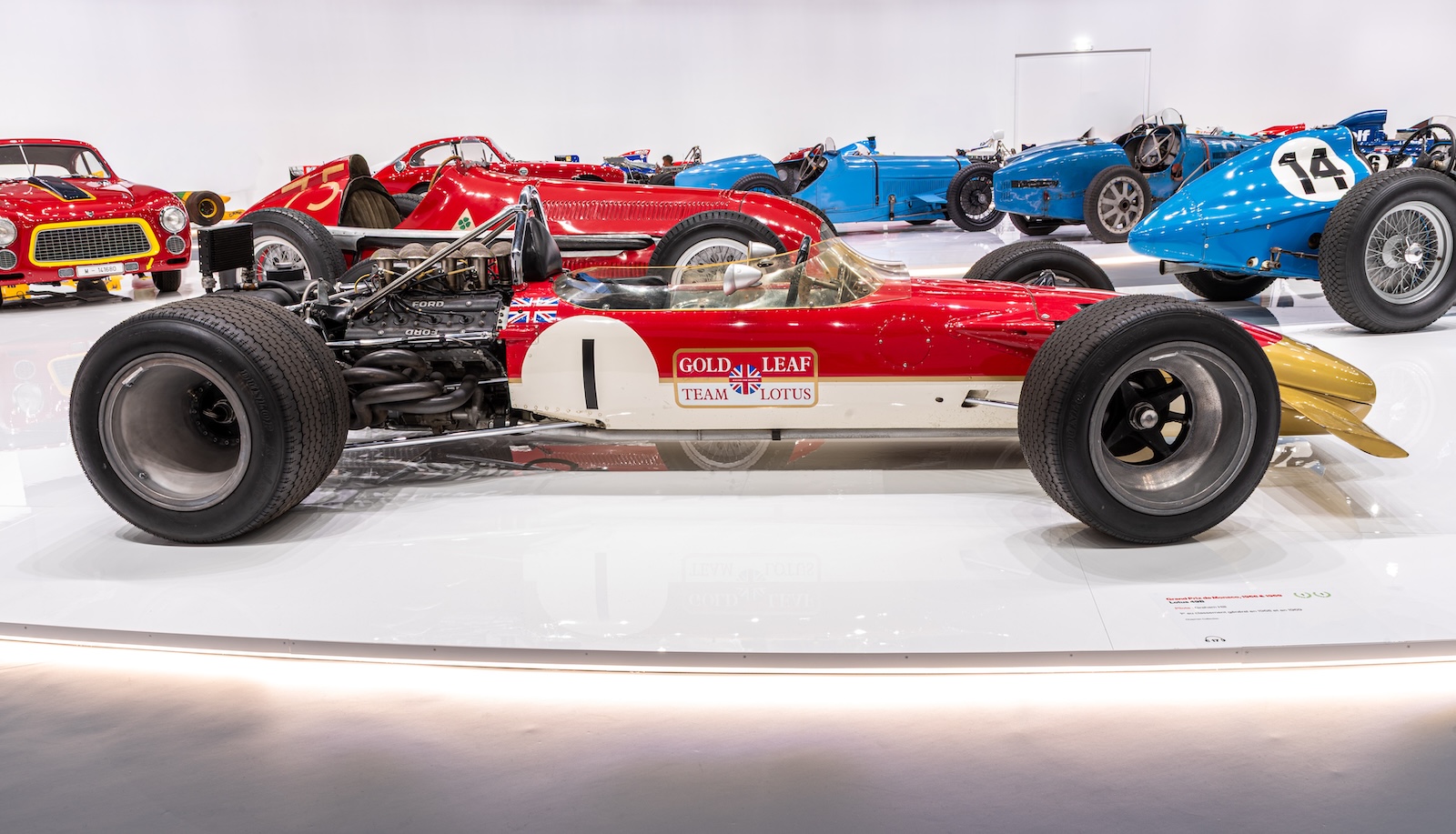
With the Lotus 49B, Colin Chapman and Maurice Philippe achieved a double revolution: the Ford-Cosworth DFV (double four-valve) engine, which supported the chassis, and the first use of a tobacco sponsor’s colours in F1. It was in this car that Graham Hill won the Monaco Grand Prix in 1968 and 1969. At the age of 40, the two-time world champion secured his fifth and final victory in the Principality.
The Lotus 49B became the first single-seater from an official team to feature a livery in the colours of a tobacco company. In keeping with American tradition, the sponsor’s name and colours replaced the traditional national colours. Lotus abandoned British green in favour of this red, gold and white livery in the colours of Gold Leaf.
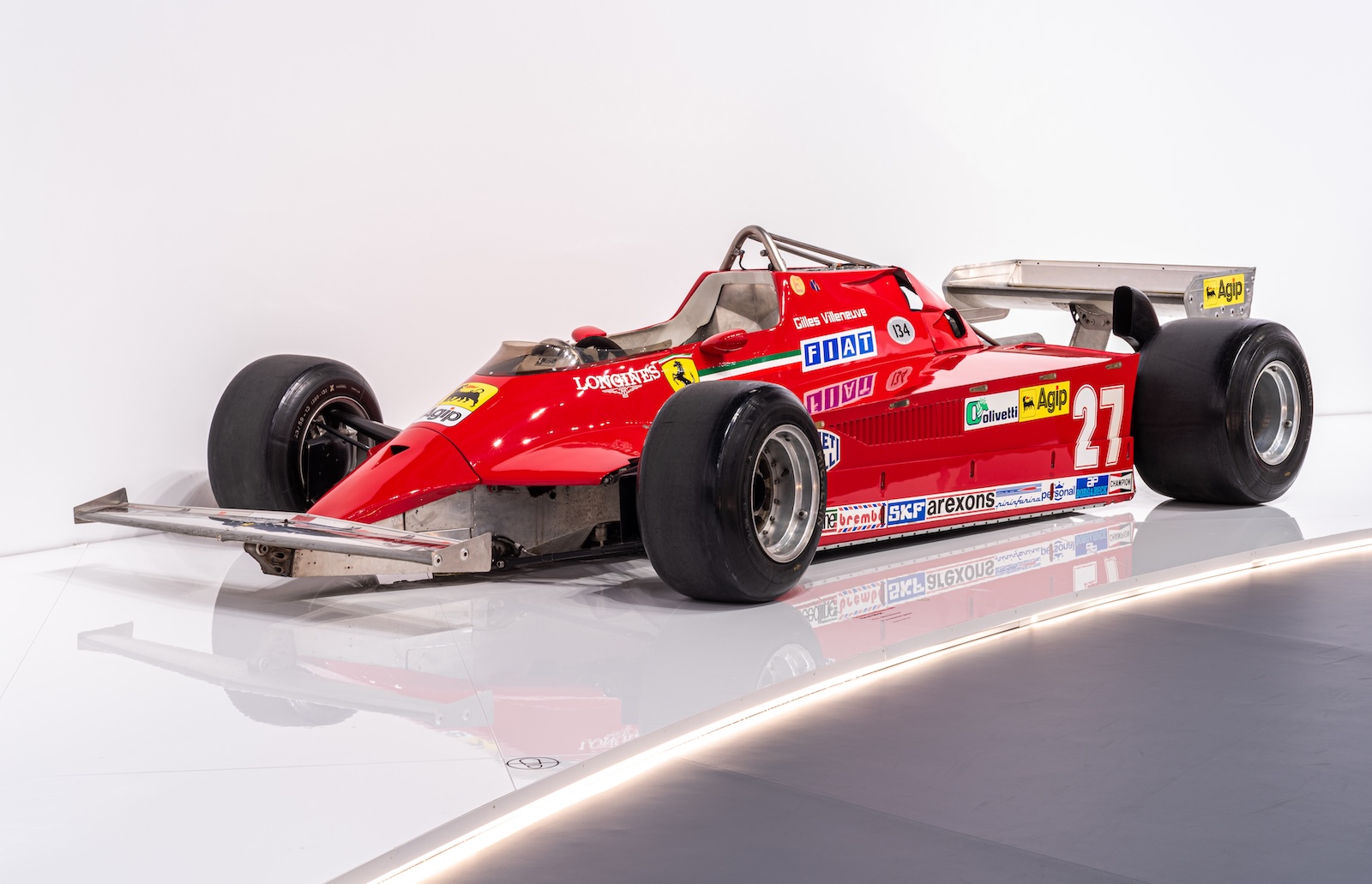
Designed by engineer Mauro Forghieri, the Ferrari 126 CK secured Gilles Villeneuve’s victory at Monaco on 31 May 1981. The same chassis, featured in this exhibition, claimed victory once again at the Spanish Grand Prix, held at the Jarama circuit. Above all, this single-seater marked a turning point in the history of the Scuderia: for the first time since its return to the World Championship, Ferrari is replacing its V12 with a turbocharged V6.
The Canadian driver, a true icon of F1 and adored for his spectacular style, died tragically on 8 May 1982 during qualifying for the Belgian Grand Prix. Just one year after his victory in Monaco, the world of motorsport lost one of its greatest drivers.
Loaned personally by Sebastian Vettel, a great admirer of Ayrton Senna, this car is one of the highlights of the exhibition. The McLaren MP4/8 is the single-seater in which Ayrton Senna won his sixth Monaco Grand Prix in 1993, breaking Graham Hill’s record of five victories. The Brazilian was racing at the time on a race-by-race contract worth around one million dollars per Grand Prix.
Despite the lack of power from his Ford-Cosworth HBD7 V8 engine, particularly when compared to the Williams’ Renault V10, Senna managed to win five rounds of the 1993 World Championship: Brazil, Europe, Monaco, Japan and Australia. Thanks to these results, he finished as runner-up in the World Championship behind Alain Prost (Williams).
Over the years, Ayrton Senna has become inseparable from the Monaco circuit. His six victories, his charisma, and his spectacular driving style have made him the undisputed icon of the Monaco Grand Prix.
Following its 2005 world titles, Renault launched its Renault R26 in 2006. It built on the legacy of the R25 with an aggressive development programme, notably marked by the introduction of a brand-new engine. In this car, Fernando Alonso won the 2006 Monaco Grand Prix ahead of Juan Pablo Montoya (McLaren) and David Coulthard (Red Bull).
The weekend was also marked by a controversy during qualifying. On his final lap of Q3, Michael Schumacher (Ferrari), who was virtually in pole position at the time, intentionally stopped at Rascasse, causing a yellow flag and ruining the other drivers’ chances. The German driver was ultimately disqualified: Fernando Alonso inherited pole position ahead of Mark Webber and Kimi Räikkönen.
Renault’s strategy paid off, as the French manufacturer and Fernando Alonso went on to win the Constructors’ and Drivers’ World Championships. The car shown here, which was driven by the Spanish driver during the entire season, is now part of the Renault Heritage collection in the Île-de-France region.
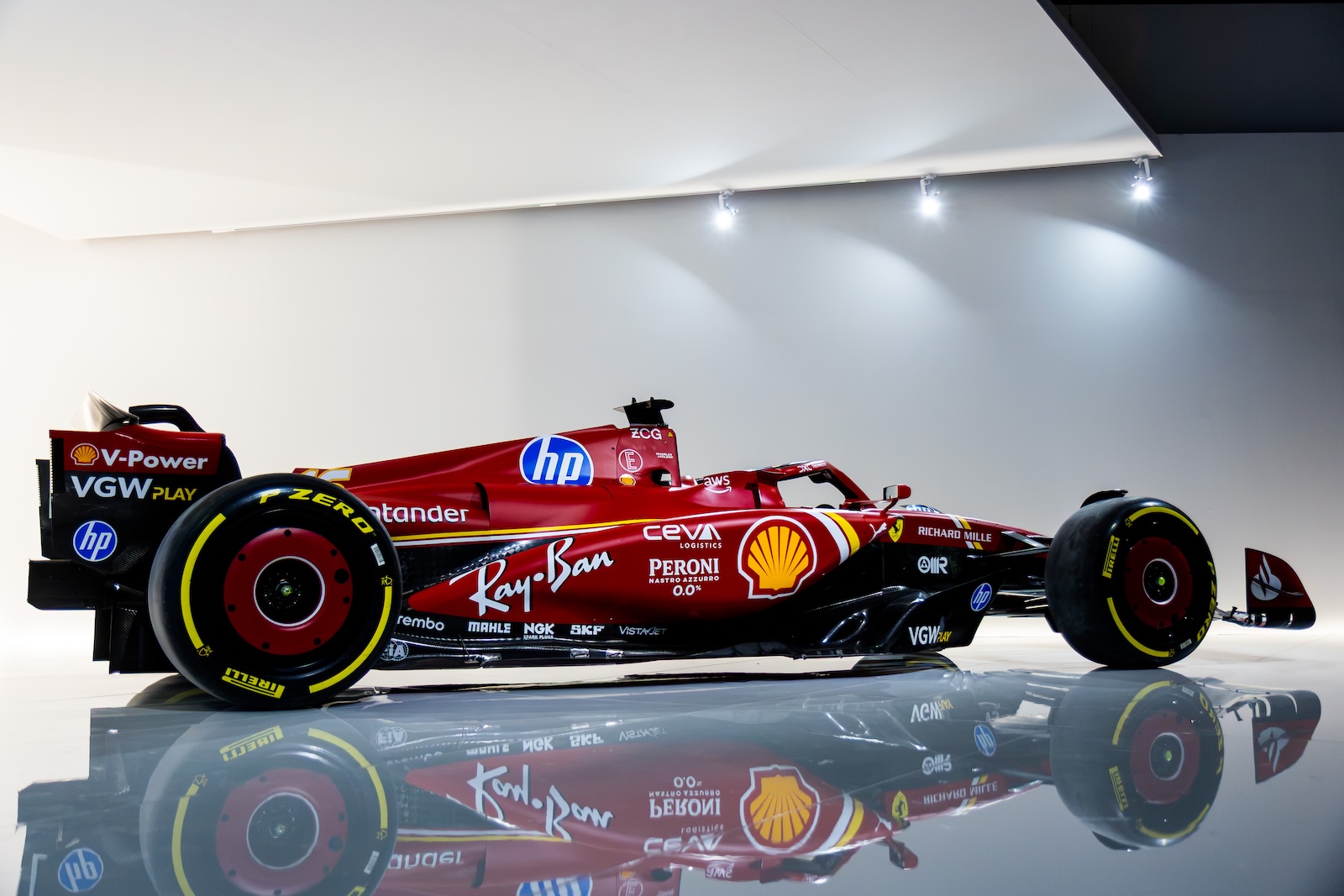
Honourable mention must also go to Charles Leclerc’s Ferrari SF-24, the car in which he won his home Grand Prix on 26 May 2024. 93 years after Louis Chiron, he became the second Monegasque driver in history to achieve this feat. Starting from pole position, Leclerc dominated the race and crossed the line as the winner, in front of a jubilant home crowd in the Principality.
These five models represent just a small part of the 53 vehicles on display in the exhibition Monaco & the Automobile. Visit the Grimaldi Forum to discover this exceptional collection in its entirety and relive more than 130 years of automotive history.
Discover five legends who have left their mark on the history of the Rallye Monte-Carlo.