Upcoming Events




Opened on 30 June and open to the public until 6 September 2026 at the Grimaldi Forum, the exhibition Monaco & l’Automobile celebrates more than 130 years of automotive history. In this two-part series, we invite you to discover some of the exhibition’s most iconic vehicles that have left their mark on the Automobile Club de Monaco’s events. In this first part, we focus on five legends of the Rallye Monte-Carlo. The second part will be dedicated to the cars that have shaped the history of the Monaco Grand Prix.
Among the 53 iconic vehicles featured in the exhibition Monaco & the Automobile, from 1893 to the Present Day, some of the greatest legends of the Rallye Monte-Carlo are, of course, included. Here is a non-exhaustive list of five iconic cars from this event, which you can discover at the Grimaldi Forum.
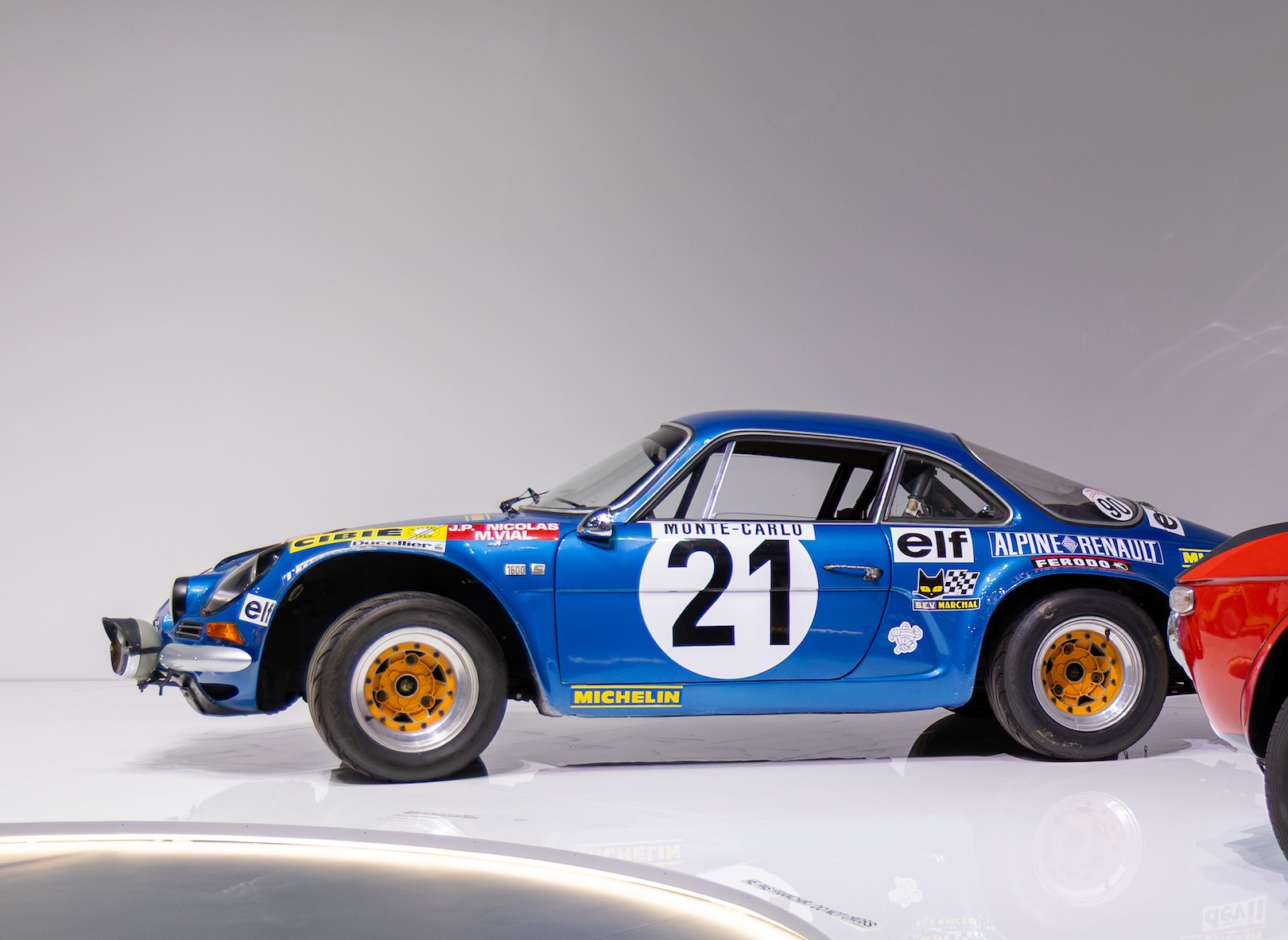
The car that started France’s rallying legend. The Alpine-Renault A110 Berlinette was the car with which Alpine secured France’s very first manufacturers’ title in the history of the World Rally Championship (WRC), which was established in 1973. The French brand dominated the competition during that inaugural season, winning six of the 13 rounds, including the 1973 Rallye Monte-Carlo.
The car exhibited here is one of the 17 cars from the official team, driven by Jean-Pierre Nicolas and Michel Vial, who finished third in that historic edition. It features the distinctive styling attributes of the ‘berlinette’, with its widened wheel arches, large additional headlights and metallic blue paintwork, which has become legendary among motorsport enthusiasts in France.
With four victories at the Rallye Monte-Carlo to its name, the Lancia Stratos HF is one of the most legendary rally cars ever built. Unbeatable between 1975 and 1977, Sandro Munari won the event three times in a row. The French drivers Bernard Darniche and Alain Mahé secured a fourth and final victory for the Stratos in 1979.
Designed exclusively for competition, the Stratos HF is characterised by its radical design and its mid-mounted Ferrari V6 engine. It quickly became the undisputed benchmark in rallying. In 1977, the Fiat Group prioritised the 131 Abarth, but the Stratos still enjoyed success: the number 1 car driven by Sandro Munari and Silvio Maiga, sporting Alitalia’s colours, took the win.
A regular entrant in the Rallye Monte-Carlo Historique, it continues to captivate enthusiasts today with its unique silhouette and the unmistakable sound of its Ferrari V6 engine.
The car behind one of the greatest comebacks in Rallye Monte-Carlo history. The Peugeot 205 Turbo 16 made its World Rally Championship debut in 1984 under the leadership of Jean Todt, then head of Peugeot Talbot Sport. The following year, in its first full season, Ari Vatanen and his co-driver Terry Harryman secured a historic victory for the French manufacturer at the Rallye Monte-Carlo. Up against Walter Röhrl (Audi), the Finn achieved one of the greatest feats in the event’s history by overcoming an 8-minute penalty to claim victory in the Principality.
Featured in this exhibition, the 205 Turbo 16 is one of the icons of Group B, a category in which engineers pushed the limits of technology. As spectacular as it was formidable, this generation of cars was eventually banned at the end of the 1986 season for safety reasons.
The car that defined an era. The Citroën Xsara WRC was the car in which Sébastien Loeb and his Monegasque co-driver Daniel Elena began their unprecedented reign of dominance. Their victory at the Rallye Monte-Carlo in 2003 marked the start of nine consecutive world titles (2004 to 2012). At the wheel of the Xsara WRC, decorated in its iconic red and blue livery, the Franco-Monegasque duo also won the 2004 and 2005 editions of the Rallye Monte-Carlo.
The 2003 victory was, in fact, seen as a moment of redemption by Sébastien Loeb and the entire Citroën team. In 2002, although the Alsatian driver had entered the Principality as the leader with a lead of more than 45 seconds, he had been penalised for a regulatory infringement involving his Xsara WRC. Under the leadership of Guy Fréquelin, Citroën Sport assembled a veritable ‘dream team’ at that time, featuring notably Carlos Sainz, Colin McRae and the young Sébastien Loeb. Yet it was Loeb who wrote one of the greatest chapters in the history of the World Rally Championship.
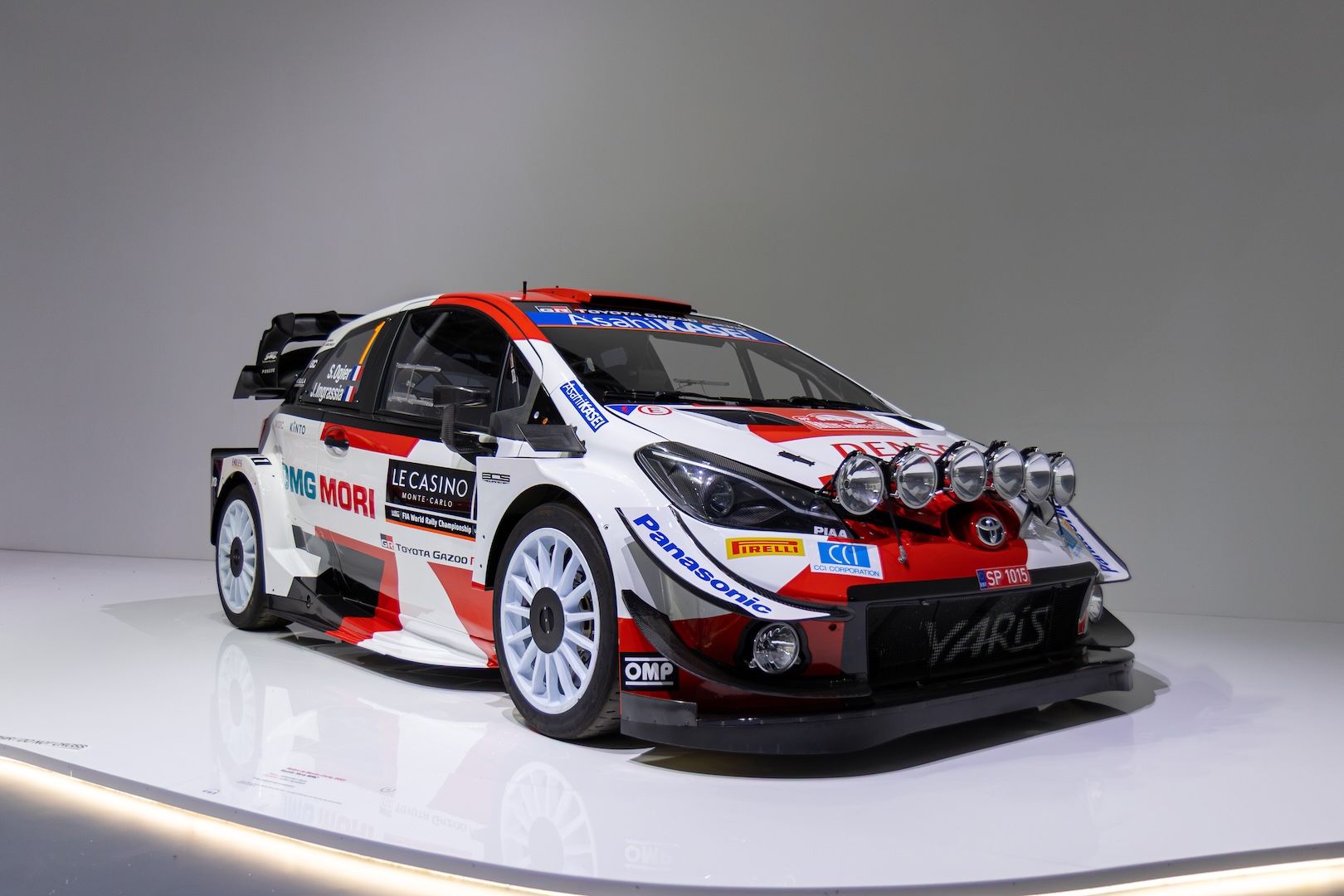
For the 2017 WRC season, Toyota is returning to a championship that the Japanese manufacturer won in 1993, 1994 and 1999. For its comeback, the Japanese manufacturer is fielding a rally version of its first city car manufactured in France: the Toyota Yaris WRC. This is the car in which Sébastien Ogier and Julien Ingrassia won the 2021 Rallye Monte-Carlo, Ogier’s eighth victory in this event, setting a record at the time.
Developed under the direction of four-time world champion Tommi Mäkinen, the Yaris WRC symbolises Toyota’s triumphant return to the very top. It was also at the wheel of this car that Ogier and Ingrassia clinched their eighth world title together at the end of the 2021 season, before the French co-driver brought his career to a close. Sébastien Ogier would then continue his WRC career on a part-time schedule, further adding to his list of achievements. As the last representative of a generation of combustion-engine WRC cars before the arrival of hybrid technology, the Toyota Yaris WRC remains a modern rally icon.
These five models are only a glimpse of the 53 exceptional vehicles featured in the exhibition Monaco & the Automobile. Visit the Grimaldi Forum to discover this exceptional collection in its entirety and relive more than 130 years of automotive history.