Upcoming Events
Menu



He was the obvious favorite for pole in the F Series, but Michael Lyons was beaten on Saturday, at the last minute of qualifying, in his blue Hesketh 308 carrying the colors of Penthouse men’s magazine.
His best time, for most of the session, was eventually beaten by Miles Griffiths, in a yellow 1977 Fittipaldi: 1:30.653 (vs 1:30.820 for Lyons), on his last lap before the checkered flag for this high-flying session. The British drivers shone, as in Friday’s free practice. Behind Griffiths and Lyons, Michael Cantillon, 4th in his Tyrrell 010 ex-Alboreto, will be sandwiched on the grid, on Sunday, between two Williams cars, the FW06 of David Shaw (3rd) and the FW07 of Mark Hazel (5th).
Jamie Constable‘s American Shadow DN8 crashed into Frédéric Lajoux‘s Arrows at the start of the session, at La Rascasse. The Monégasque had to stop there and will start at the back on the grid on Sunday.
And with the same driver twice in a row at the top of the timesheet, Britain’s Stuart Hall , untouchable in two McLarens: first the M19A which looked like a rocket in the D Series “Jackie Stewart“! This all-white 1971 car in Yardley cosmetics livery, completed its best lap in 1:30.096, two seconds faster than its pursuers: the Matra MS120C of Jordan Grogor, the South African based in Dubai , and the BRM P153 of Mexican Esteban Gutierrez, once driven by his legendary compatriot Pedro Rodriguez.
Same story in the E Series, since Hall, in a 1973 McLaren M23, was faster than Roberto Moreno, the former Benetton F1 driver, entered in a 1974 Lola T370. Hall got two seconds close to the best time clocked in 1973 by Denny Hulme in qualifications, the day before a Grand Prix won by Jackie Stewart (Tyrrell) ahead of Emerson Fittipaldi and Ronnie Peterson (Lotus).
Surprise in the A2 Series “Juan Manuel Fangio”: Alex Birkenstock was expected at the wheel of the Ferrari 246, but Claudia Hürtgen replaced him at short notice and set the best time (1:52.421) of these qualifications to ensure a pole start on Sunday. In this series, a Ferrari – Maserati battle was an option, but Tony Wood drove his 1959 Tec-Mec F415 into second place, two tenths behind Mrs Hürtgen, ahead of Joaquin Folch-Rusinol‘s Lotus 16.
This great qualifying day, with 8 series on the menu, was launched by the B Series, called “Graham Hill” and divided into 3 classes. Mark Shaw, driving a Lotus 21, and Joseph Colasacco, who drives Lorenzo Bandini‘s Ferrari 1512, went head to head, flying above their class and the prancing horse single-seater was eventually the fastest car on track in 1:47.631 .
In the A1 Series “Louis Chiron”, we had to wait until the very end of the qualifying session to see Mark Gillies take pole position! The American pushed his 1934 ERA R3A to the limit and managed to edge out his little sister, the 1935 ERA R4A driven by Nicholas Topliss. We were expecting these two single-seaters at the top of the classification; it’s done ! See you on Sunday for the final duel.
The anecdote was told on Friday in the paddock of the GP de Monaco Historique to Jean-Denis Delétraz, who is driving this year in the Principality a superb black Shadow DN3 carrying an American flag. And it was told to him by Jean-Pierre Jarier, who was driving it in 1974 at Monaco, finished 3rd that year, but should have won: “He was in the lead by 15 seconds when the sleeve of his overall caught the circuit breaker in the cockpit and caused the car to stall” , smiles the Swiss driver, already seen in the Principality in an ATS and especially in a Hesketh ex-James Hunt.
He is very fond of this Ford-Cosworth-powered Shadow which he discovered on Friday and he hopes to enter the Top 5 of the E Series on Sunday. To be continued.

It was the last session of the day and German Marco Werner, in a 40-year-old Lotus 87, finished at the top of the timesheets in the free practice session of the G Series, dubbed “Ayrton Senna” and reserved to F1s produced between 1981 and 1985, at the beginning of the era of turbo engines. Triple winner of Le Mans 24 Hours, Werner was almost two seconds faster than gentleman driver Christophe d’Ansembourg, at the wheel of a 1981 Williams FW07C, driven that year by reigning World Champion Alan Jones (2nd in Monaco). Werner’s great rival, Britain’s Michael Lyons, had to settle for 6th position, in his 1983 Lotus 92. Qualifying will start Saturday morning at 8:15 a.m. with the B Series opening another beautiful day on the Monaco Circuit.
Free practice for the F Series, at the end of the afternoon, allowed the British drivers to shine with a thousand lights: seven drivers of his Gracious Majesty in the Top 7, followed by Monaco’s Fred Lajoux, at the wheel of his black and gold Arrows, the one and only non-Brit in the Top 10.
Michael Lyons, in a blue Hesketh 308 carrying the colors of Penthouse magazine, was the fastest, in 1:31.265, while completing only 11 laps, ahead of the Tyrrell (ex-Alboreto) of Michael Cantillon, followed by Miles Griffiths, in a yellow 1977 Fittipaldi, and David Shaw in a 1979 Williams FW06, the year before Alan Jones won the world title. As for Nicolas Matile, the Monegasque florist, he took a very honorable 13th place on Friday the 13th of this 13th edition…
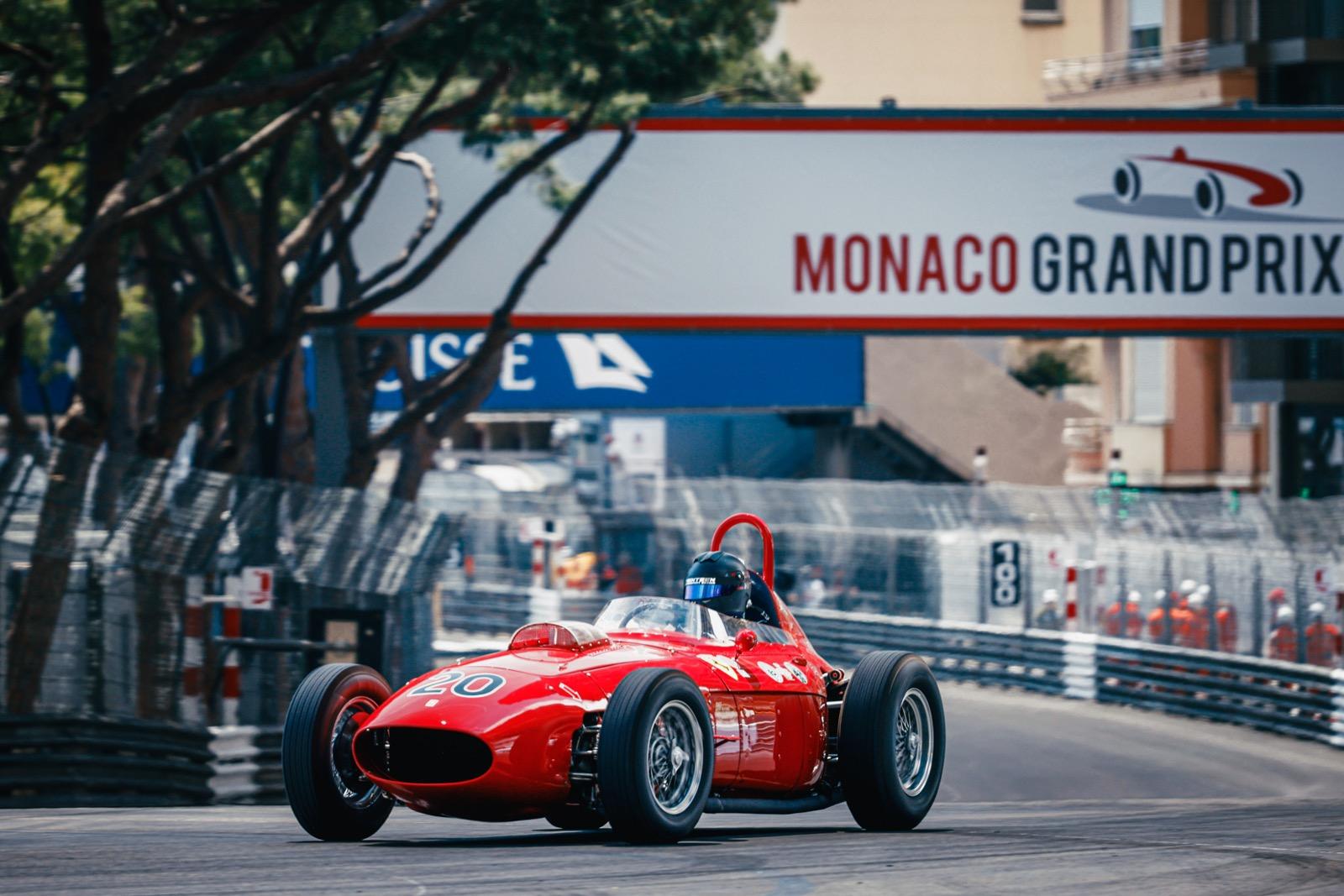
Very elegant in an immaculate white overall, Esteban Gutierrez, former F1 driver with Sauber and Haas between 2013 and 2016 (60 GPs contested, 6 points scored), returned with great pleasure to the streets of the Principality in a BRM belonging to the legend of Mexican motorsport: a 1970 BRM P153 that won the same year at the Belgian GP with Pedro Rodriguez at the wheel.
“This car is part of history so I’m very proud to drive it. But it’s not easy, the engine is very powerful and it slides a lot, especially in the S of the Piscine“, says Esteban. “The trickiest part is the exit from the tunnel, because you arrive very quickly and you have to brake hard while dropping the gear ratios. It’s very + mechanical +“, adds the Mexican driver, now converted to endurance, in WEC, after having considered for a time getting into Formula E. “I like driving these old cars, I had already done it at Goodwood“, Esteban adds. And it shows.
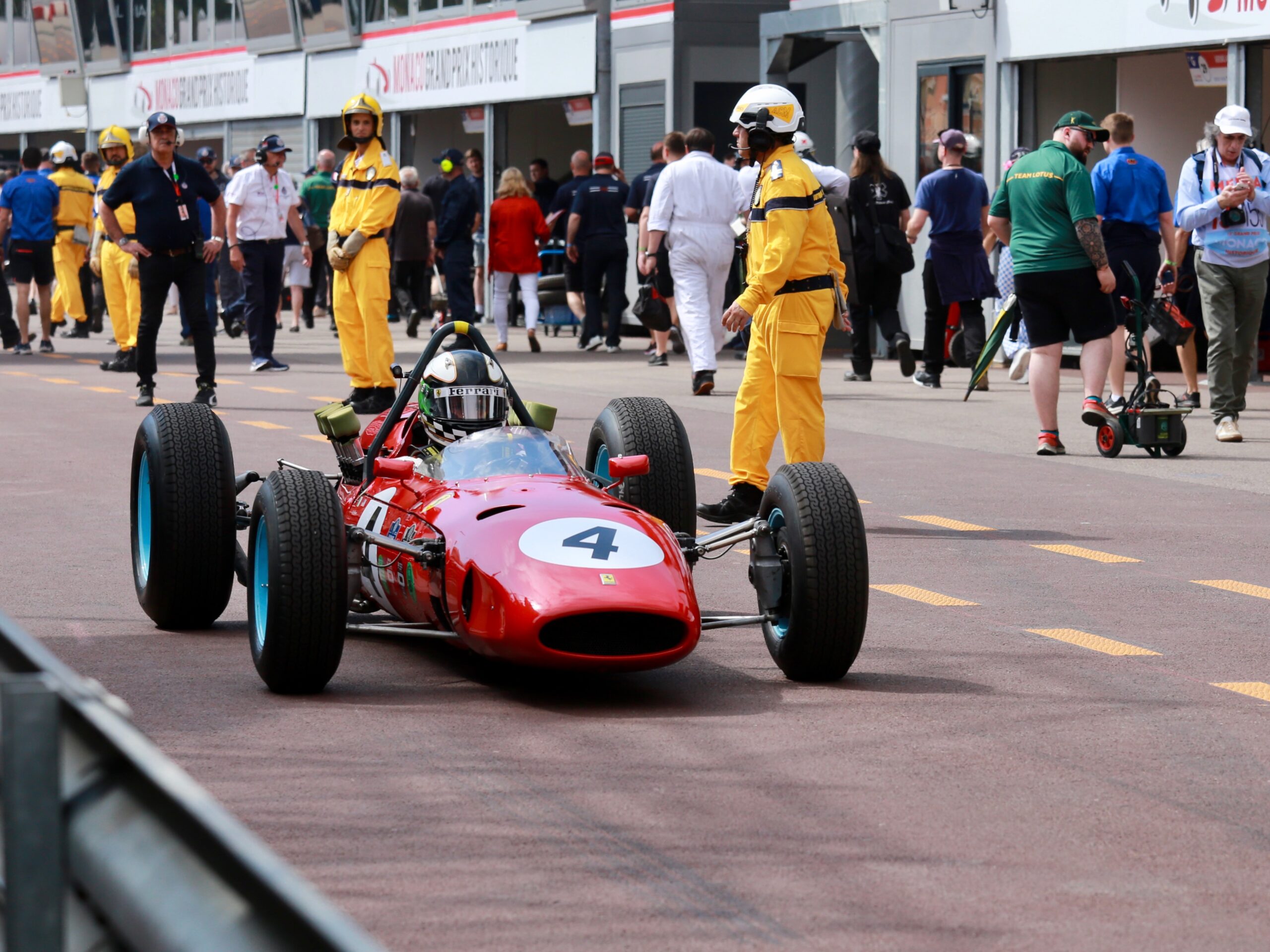
Emmanuele Pirro, Marco Werner, multiple winners of Le Mans 24 Hours with Audi, Roberto Moreno, a former Benetton F1 driver, but also Mrs Claudia Hurtgen, Jean-Denis Delétraz and Toni Seiler, Roald Goethe and Michael Lyons, three times victorious the year last, in beautiful single-seaters: Embassy-Hills, Shadows, McLarens, a Ferrari and above all a whole lot of Lotus F1 cars.
The E Series of the 13th GP de Monaco Historique was eagerly awaited and it did not disappoint, with incredible lap times for cars produced in the 70s, around a minute and a half per lap. Also note the presence of a 1975 Ensign driven by Guillaume Roman for the great debut of the Ayari Classic team in historic races. It has just been founded in Montélimar by former driver Soheil Ayari who will be back on track in June, at the French Historic GP, at the wheel of a Ligier JS21.
HSH Prince Albert II of Monaco launched the 13th edition of Grand Prix de Monaco Historique on Friday morning by spending a long time in the paddock where more than 180 exceptional cars and their experienced drivers were waiting to finally be able to enter the mythical track which will be reserved for them all weekend.
Welcomed by Michel Ferry, Vice-President of the Automobile Club of Monaco (ACM) in charge of Sport, and by Gery Mestre, President of the Classic Cars Commission, Prince Albert had a long talk with Monegasque driver Frédéric Lajoux entered as in 2018, in the F Series, driving a superb black and gold Arrows, dating from 1978. Also with the aim of paying tribute to young Formula 2 driver Anthoine Hubert, tragically deceased at Spa-Francorchamps in August 2019 .
While His Serene Highness wandered around the paddock, the first three series, A1, A2 and B, allowed the ACM stewards, already well trained by the Monaco E-Prix 15 days ago, to get on the job. They were very efficient, as always, in Sainte-Dévote and La Rascasse following small shocks against the safety barriers or minor incidents with limited damage, and there was no need to wave red flags.
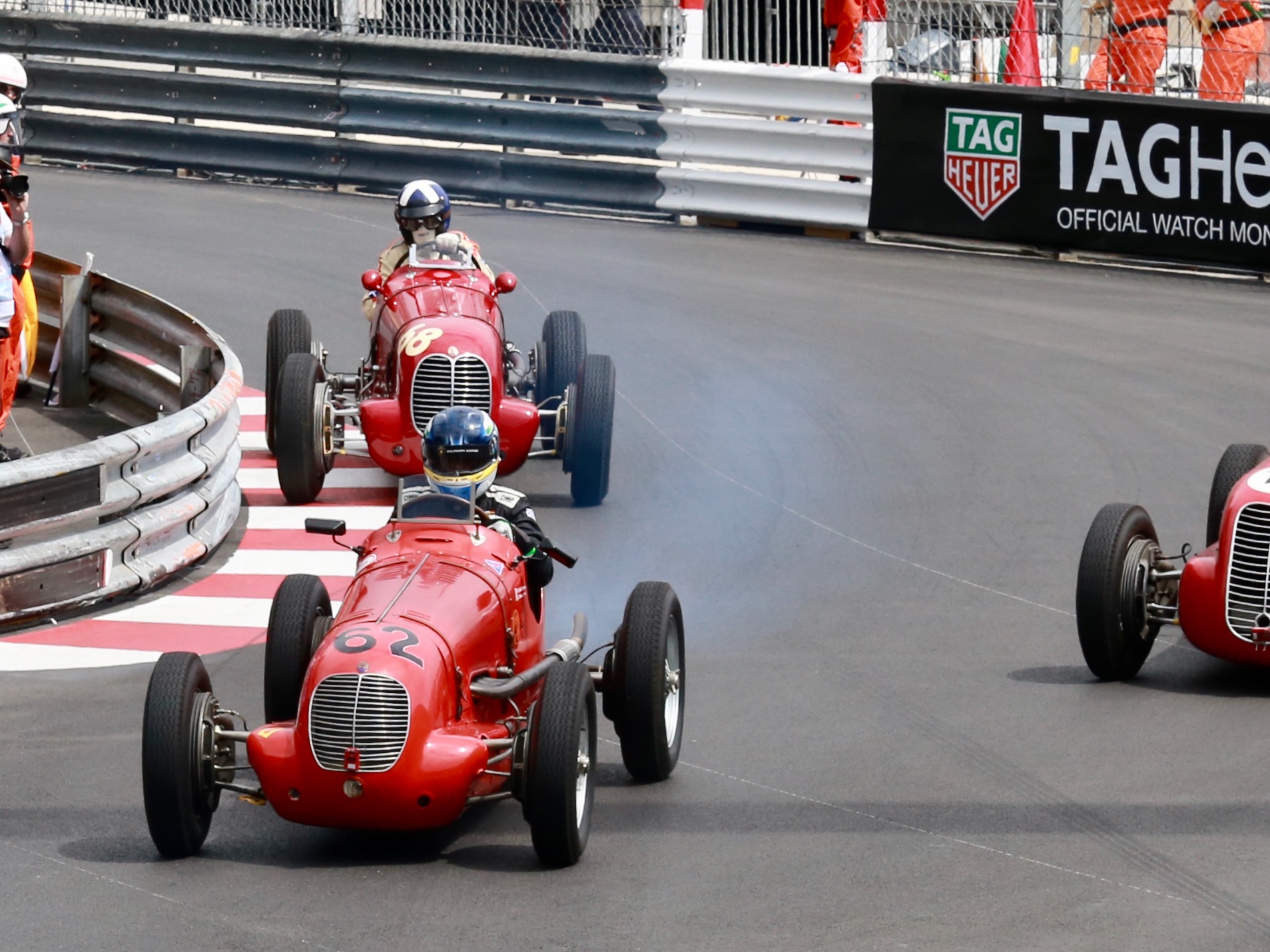
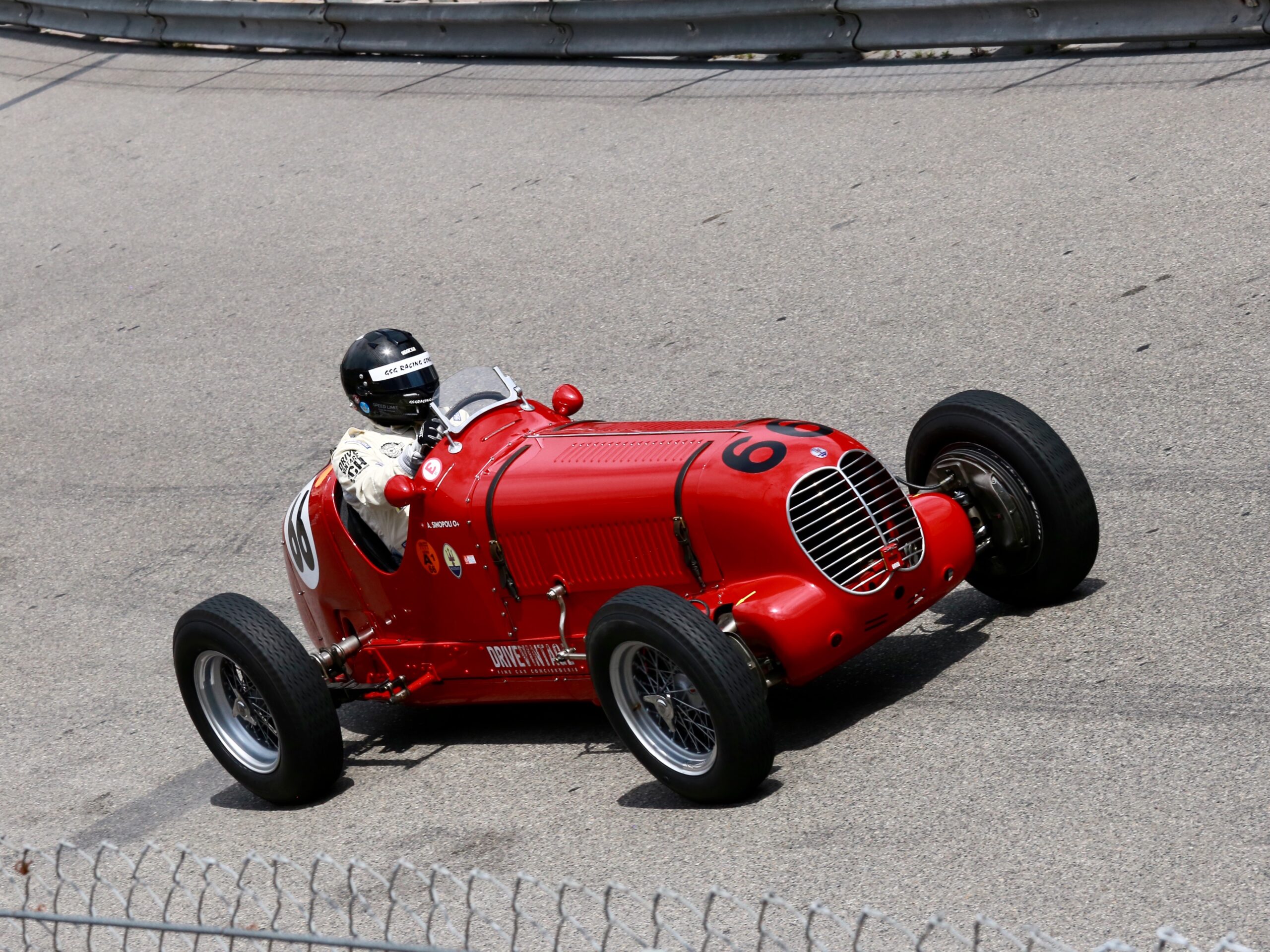
The first quality lap times fell to A1 series drivers, notably the venerable ERAs of Nicholas Topliss (Class 1) and Mark Gillies (Class 2), pre-war cars (voiturettes) managing to beat a pack of Bugattis, Maseratis and other Alfa Romeos.
In the B series, under the expert eyes of Clive Chapman, son of Colin Chapman and boss of the Lotus Classic Cars team, a car from the English brand that was the fastest: the Lotus 21 of 1961, with a Climax engine, entered for Mark Shaw, a regular customer of the event, who beat Joseph Colasacco’s Ferrari and Christopher Drake’s Cooper-Ford.
All eight series were on the menu of this opening day of the 13th GP de Monaco Historique, including a huge number of Lotus cars to celebrate the 40th anniversary of the passing of Colin Chapman . Most of them in English green livery, the famous “Racing Green” often seen in the 60s, or in black and gold livery, as was the case in the 70s. To the delight of nostalgics!!!
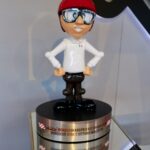
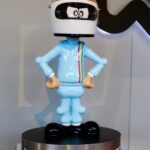
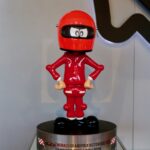
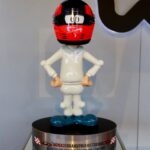
An artist whose work we were able to admire last year at the Collection de Voitures de S.A.S. le Prince of Monaco, of which paintings, driver statues, figurines, art cars and also a magnificent sculpture interpretation of Ayrton Senna’s Lotus 97T.
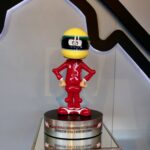
Together with his colleague from Geneva, Fernando Grande, Yvon Amiel has designed and produced 8 Trophy’s, each an effigy of the 8 drivers who’s names headline a series of races. From Louis Chiron and Aytron Senna to Juan Manuel Fangio, Vittorio Marzotto, Graham Hill, Jackie Stewart, Niki Lauda and Gilles Villeneuve.
A very nice reward for the winning drivers of each race, who will all go home with a unique and original work of art.
In addition to winning the H.S.H. the Prince of Monaco’s Cup, the winners of each race will each leave with a unique and original work of art… just like the Historic Monaco Grand Prix!
*Antoine le pilote, hero for kids aged 5 till 105. 15 albums to date, published by Gilletta.